Safe Speed Forums

The campaign for genuine road safety
It is currently Sat Apr 25, 2026 10:33

All times are UTC [ DST ]


Post new topic Reply to topic  [ 494 posts ]  Go to page Previous  1, 2, 3, 4, 5 ... 25  Next
Author Message
 Post subject: Hi NDP
PostPosted: Wed Feb 01, 2006 19:40 
Offline
Life Member
Life Member

Joined: Tue Apr 12, 2005 10:26
Posts: 194
Location: Burton on Trent
Hi NDP,
I am currently in discussion with my MP about a speed camera being used near my home. I thought that most of the time the 85th percentile figure was the main guide . Do you know if this is the case ? If this figure is not used then how are speed limits arrived at ?

Regards

:) Richard


Top
 Profile Send private message  
 
 Post subject:
PostPosted: Wed Feb 01, 2006 21:38 
Offline
User

Joined: Tue Jan 17, 2006 01:32
Posts: 240
SafeSpeed wrote:
ndp wrote:
SafeSpeed wrote:
Study the following page carefully and see if you agree: http://www.safespeed.org.uk/rules.html


I think that makes two flawed assumptions -

a) That the 85-95%ile drivers are competant at assessing the appropriate speed for a road - if thats the case, one has to wonder why so many are failing to slow to the speed limit on the approach to cameras and


Not 85th to 95th percentile - it has to be sub 85th percentile in order for the 85th percentile to be above the prosecution threshold.


OK, but the point remains that your assuming that the speeding drivers up to the 85% are correct in their assessment of the appropriate speed.

Quote:
I'm perfectly happy to believe that they are driving at an appropriate speed for the conditions.[/auote]

I'm also happy to believe anything that suggests I'm right :p

Quote:
The enabling speed survey will take place when no cameras are present.


Well of course.

Quote:
ndp wrote:
b) That the speed that these drivers consider to be safe is actually safe. As discussed in the roadworks thread, there may well be factors that these drivers are completely unaware of - given this, how can we necessarily rely on them to be correct in their judgement? The 85%-ile driver may get it right most of the time, but sometimes they do go too fast, which is why we need limits backed up with enforcement. In these situations, it is quite likely that 85%+ of traffic will be speeding - hence why cameras may be used in these situations.


Excessive speed crashes are FAR too rare for inappropriate speeds to be so widespread. With 32 million licenced drivers, 12% of crashes with 'excessive speed' as a contributory factor


Is this based on accident report data?

You are aware of how this data is collected?

Quote:
and 214,000 injury crashes in a year causing an excessive speed injury crash is a once in 1,250 years for the average driver. And of course most of those are well above the 85th percentile.


Aside from issues with the nature of the data, its never as black and white as causation - its a question risk and consequences. This is the purpose of limits and cameras, to manage the risk and the consequences to within acceptable levels.

Quote:
It's COMPLETELY out of the question to suggest that more than 15% using speed inappropriately to a significant degree.


Always?

Quote:
There's no way on earth that they [cameras] will make us into safer drivers.


No, we make ourselves safer drivers.

What cameras and limits do is provide a mechanism to deal with those who aren't driving safely.


Top
 Profile Send private message  
 
 Post subject: Re: Hi NDP
PostPosted: Wed Feb 01, 2006 21:42 
Offline
User

Joined: Tue Jan 17, 2006 01:32
Posts: 240
HalcyonRichard wrote:
Hi NDP,
I am currently in discussion with my MP about a speed camera being used near my home. I thought that most of the time the 85th percentile figure was the main guide . Do you know if this is the case ? If this figure is not used then how are speed limits arrived at ?

Regards

:) Richard


I would imagine it is a consideration to be considered alongside the long list of other considerations


Top
 Profile Send private message  
 
 Post subject:
PostPosted: Wed Feb 01, 2006 21:56 
Offline
Gold Member
Gold Member

Joined: Fri Sep 24, 2004 23:26
Posts: 9268
Location: Treacletown ( just north of M6 J3),A MILE OR TWO PAST BEDROCK
Quote:
What cameras and limits do is provide a mechanism to deal with those who aren't driving safely.


UHHH - Cameras and the overzealous use of limits provide a false idea that as long as we are not over the limit we are safe - when indeed the limit speed could be absolute suicide - for both driver and pedestrians -
we have a road past a school --wide enough for a row of parked cars on one side, a row of parked buses on the other and a single file of traffic between --at school going in /chucking out time, with a pedestrian crossing not so far away, cars disgorging kids all over and kids running accross the road. You tell me that 30 (as limit) is safe (or even possible ) at that time.

Now at 7.30 on Sunday morning - a few cars parked on one side - no kids no traffic --the 30 limit is safe , possibly to low. But i have seen a talivan "enforcing" at that time.

The problem is that the gospel according to St Pratnership says that in both cases 29MPH is safe.

In the first case a car could be doing 29 (safe says the scams) ---not speeding - where is the mechanism to deal with the excess speed - bring back PC Trafpol

_________________
lets bring sanity back to speed limits.
Drivers are like donkeys -they respond best to a carrot, not a stick .Road safety experts are like Asses - best kept covered up ,or sat on


Top
 Profile Send private message  
 
 Post subject:
PostPosted: Wed Feb 01, 2006 22:45 
Offline
Banned
Banned

Joined: Thu Apr 15, 2004 12:47
Posts: 2291
SafeSpeed wrote:
No. It couldn't be more wrong. Study the following page carefully and see if you agree: http://www.safespeed.org.uk/rules.html


The picture you have chosen for your example is one of a pair. The other one, which is not shown, has markings on it, which show that a pedestrian crossing passes over this stretch at exactly the spot from where the picture was taken. Funny that - the close proximity of a pedestrian crossing over this road somewhat weakens your case that the limit should be opened up here, doesn't it!

_________________
I stole this .sig


Top
 Profile  
 
 Post subject:
PostPosted: Wed Feb 01, 2006 22:50 
Offline
Friend of Safe Speed
User avatar

Joined: Tue Mar 09, 2004 23:09
Posts: 6737
Location: Stockport, Cheshire
basingwerk wrote:
The picture you have chosen for your example is one of a pair. The other one, which is not shown, has markings on it, which show that a pedestrian crossing passes over this stretch at exactly the spot from where the picture was taken. Funny that - the close proximity of a pedestrian crossing over this road somewhat weakens your case that the limit should be opened up here, doesn't it!

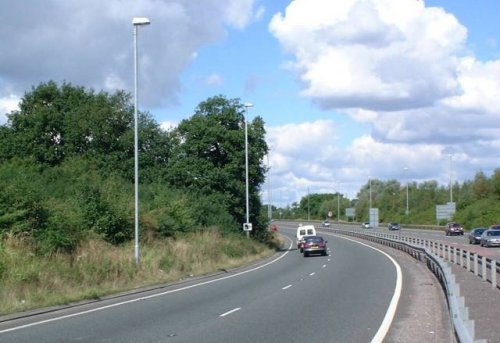
Given that there are no properties whatsoever on the road, why does it need to be a 30 limit in the first place? There are plenty of 40 limits with Pelican crossings - I can even think of an NSL.

And why do we have to wait for about 300 yards travelling away from the crossing before the higher limit kicks in?

Image

(my picture, btw)

On the A50 at Uttoxeter the Highways Agency have done something similar to protect a Pelican crossing, but it involves at 40 limit, not a 30, and is markedly shorter in extent.

_________________
"Show me someone who says that they have never exceeded a speed limit, and I'll show you a liar, or a menace." (Austin Williams - Director, Transport Research Group)

Any views expressed in this post are personal opinions and may not represent the views of Safe Speed


Top
 Profile Send private message  
 
 Post subject:
PostPosted: Wed Feb 01, 2006 23:01 
Offline
User

Joined: Tue Jan 17, 2006 01:32
Posts: 240
botach wrote:
Quote:
What cameras and limits do is provide a mechanism to deal with those who aren't driving safely.


UHHH - Cameras and the overzealous use of limits provide a false idea that as long as we are not over the limit we are safe - when indeed the limit speed could be absolute suicide


Indeed, it is important that engineering and enforcement measures ensure the burben of responsibility is firmly on the drivers shoulders - however, this isn't compatible with limits being used as limits and being enforced as such.

The main failing of current policy is the simplistic message that is put out to explain why we have cameras and why we have limits, and why drivers should stick to them. Thats not easy to solve - its simply symptomatic of the age of the soundbite.

Quote:
In the first case a car could be doing 29 (safe says the scams) ---not speeding - where is the mechanism to deal with the excess speed - bring back PC Trafpol


I didn't say cameras were *the* mechanism to deal with speed; rather, that they are *a* mechanism to deal with speed.


Top
 Profile Send private message  
 
 Post subject:
PostPosted: Wed Feb 01, 2006 23:14 
Offline
User

Joined: Tue Jan 17, 2006 01:32
Posts: 240
basingwerk wrote:
SafeSpeed wrote:
No. It couldn't be more wrong. Study the following page carefully and see if you agree: http://www.safespeed.org.uk/rules.html


The picture you have chosen for your example is one of a pair. The other one, which is not shown, has markings on it, which show that a pedestrian crossing passes over this stretch at exactly the spot from where the picture was taken. Funny that - the close proximity of a pedestrian crossing over this road somewhat weakens your case that the limit should be opened up here, doesn't it!


Except speed limits shouldn't (generally) be used to deal with an individual hazard (eg a signalised pedestrian crossing). The onus is on drivers to deal with hazards - they can expect to have their hand held, and anything that holds drivers hands is something that needs careful consideration.

I'd suggest that all that is needed here is a pair of warning signs (one on each side of the carriageway) to diag 543 (signals ahead), possibly with a distance plate to diag 572 if there is an issue with the distance to the crossing being disceptive. (I'd also suggest that even this is only necessary as the road appears to be a fast dual carriageway - not the place you'd expect to find signals).

If there is still a problem (if indeed there ever was one), then a red light camera would be the next step.

If there was still a problem (and I'd suggest that'd be pretty exceptional) then maybe a local speed limit, and I'd suggest that should be 40 and as tightly drawn as possible [though there are alot of things to consider, such as the siting of signs and "see through"]).

30 in this instance seems excessive and its hand holding which should not be indulged in (drivers will only come to expect it, and that is dangerous).


Top
 Profile Send private message  
 
 Post subject:
PostPosted: Wed Feb 01, 2006 23:16 
Offline
Site Admin
User avatar

Joined: Sat Mar 06, 2004 06:46
Posts: 16903
Location: Safe Speed
ndp wrote:
SafeSpeed wrote:
ndp wrote:
SafeSpeed wrote:
Study the following page carefully and see if you agree: http://www.safespeed.org.uk/rules.html


I think that makes two flawed assumptions -

a) That the 85-95%ile drivers are competant at assessing the appropriate speed for a road - if thats the case, one has to wonder why so many are failing to slow to the speed limit on the approach to cameras and


Not 85th to 95th percentile - it has to be sub 85th percentile in order for the 85th percentile to be above the prosecution threshold.


OK, but the point remains that your assuming that the speeding drivers up to the 85% are correct in their assessment of the appropriate speed.


No - it actually means that less than 15% are driving too fast for the conditions. And hell, yes, I'm 100% certain of it.


ndp wrote:
Quote:
I'm perfectly happy to believe that they are driving at an appropriate speed for the conditions.


I'm also happy to believe anything that suggests I'm right :p


:)


ndp wrote:
Quote:
The enabling speed survey will take place when no cameras are present.


Well of course.

Quote:
ndp wrote:
b) That the speed that these drivers consider to be safe is actually safe. As discussed in the roadworks thread, there may well be factors that these drivers are completely unaware of - given this, how can we necessarily rely on them to be correct in their judgement? The 85%-ile driver may get it right most of the time, but sometimes they do go too fast, which is why we need limits backed up with enforcement. In these situations, it is quite likely that 85%+ of traffic will be speeding - hence why cameras may be used in these situations.


Excessive speed crashes are FAR too rare for inappropriate speeds to be so widespread. With 32 million licenced drivers, 12% of crashes with 'excessive speed' as a contributory factor


Is this based on accident report data?

You are aware of how this data is collected?


Absolutely. But it doesn't matter. The figures are so vast that even gross errors would even begin to affect the conclusions. And I have an ace.

The median driver has FAR less than the average crash risk. Consider this graph:

Image

With drivers sorted by crash risk it's immediately obvious that much of the risk is concentrated at the low quality end of the scale. I reckon 10% of drivers cause 60% of crashes.

We need to police well at the lower end of the scale. We need to encourage and train the rest - 80% say.

ndp wrote:
Quote:
and 214,000 injury crashes in a year causing an excessive speed injury crash is a once in 1,250 years for the average driver. And of course most of those are well above the 85th percentile.


Aside from issues with the nature of the data, its never as black and white as causation - its a question risk and consequences. This is the purpose of limits and cameras, to manage the risk and the consequences to within acceptable levels.

Quote:
It's COMPLETELY out of the question to suggest that more than 15% using speed inappropriately to a significant degree.


Always?


You might find a couple of funny accident black spots.

ndp wrote:
Quote:
There's no way on earth that they [cameras] will make us into safer drivers.


No, we make ourselves safer drivers.

What cameras and limits do is provide a mechanism to deal with those who aren't driving safely.


Except cameras don't - and do distort everyone's safety priorities - pushing a minor factor WAY up the scale where it doesn't belong.

Limits are useful so long as we don't get too obssessed with them. Remember 60% of drivers are 'speeding' on most road types according to DfT figures. Yet excessive speed crashes (which also include inappropriate speed within the speed limit) are a seriously rare. And when they do crop up it's more typically a hazard perception failure than a careless use of speed.

_________________
Paul Smith
Our scrap speed cameras petition got over 28,000 sigs
The Safe Speed campaign demands a return to intelligent road safety


Top
 Profile Send private message  
 
 Post subject:
PostPosted: Wed Feb 01, 2006 23:18 
Offline
Gold Member
Gold Member

Joined: Fri Sep 24, 2004 23:26
Posts: 9268
Location: Treacletown ( just north of M6 J3),A MILE OR TWO PAST BEDROCK
Quote:
I didn't say cameras were *the* mechanism to deal with speed; rather, that they are *a* mechanism to deal with speed.


Unfortunately as far as the present government is concerned *a* = *the*

There is talk of a carrot and stick policy ---the carrot has withered and wilts having been kept in the dark too long, whilst the stick grows at the rate of the partnership empires.

_________________
lets bring sanity back to speed limits.
Drivers are like donkeys -they respond best to a carrot, not a stick .Road safety experts are like Asses - best kept covered up ,or sat on


Top
 Profile Send private message  
 
 Post subject:
PostPosted: Wed Feb 01, 2006 23:21 
Offline
Friend of Safe Speed
User avatar

Joined: Tue Mar 09, 2004 23:09
Posts: 6737
Location: Stockport, Cheshire
ndp wrote:
If there was still a problem (and I'd suggest that'd be pretty exceptional) then maybe a local speed limit, and I'd suggest that should be 40 and as tightly drawn as possible [though there are alot of things to consider, such as the siting of signs and "see through"]).

Given the location, which I am familiar with, I would say a tightly drawn 40 would be appropriate, and would give a useful signal to drivers. The Pelican crossings are situated just on the exit from a roundabout.

When driving in the opposite direction, down the hill towards the crossing, the 30 limit must extend for at least 400 yards, and I would say is universally ignored apart from learners and IAM associates on observed runs. Although one IAM observer I spoke to said he deliberately avoided that road as he couldn't in all conscience expect his associates to adhere to the 30.

_________________
"Show me someone who says that they have never exceeded a speed limit, and I'll show you a liar, or a menace." (Austin Williams - Director, Transport Research Group)

Any views expressed in this post are personal opinions and may not represent the views of Safe Speed


Top
 Profile Send private message  
 
 Post subject:
PostPosted: Wed Feb 01, 2006 23:35 
Offline
User

Joined: Tue Jan 17, 2006 01:32
Posts: 240
SafeSpeed wrote:
ndp wrote:
SafeSpeed wrote:
ndp wrote:
SafeSpeed wrote:
Study the following page carefully and see if you agree: http://www.safespeed.org.uk/rules.html


I think that makes two flawed assumptions -

a) That the 85-95%ile drivers are competant at assessing the appropriate speed for a road - if thats the case, one has to wonder why so many are failing to slow to the speed limit on the approach to cameras and


Not 85th to 95th percentile - it has to be sub 85th percentile in order for the 85th percentile to be above the prosecution threshold.


OK, but the point remains that your assuming that the speeding drivers up to the 85% are correct in their assessment of the appropriate speed.


No - it actually means that less than 15% are driving too fast for the conditions.


Even if it is less that 15% of drivers, thats still alot of drivers.

And surely if you're assuming that 15% are driving too fast, then you are making an assumption which is even bolder than mine - that *at least* 85% of drivers are correct in the assessment of their speed.

Quote:
And hell, yes, I'm 100% certain of it.


On what grounds?


Quote:
Quote:
Quote:
ndp wrote:
b) That the speed that these drivers consider to be safe is actually safe. As discussed in the roadworks thread, there may well be factors that these drivers are completely unaware of - given this, how can we necessarily rely on them to be correct in their judgement? The 85%-ile driver may get it right most of the time, but sometimes they do go too fast, which is why we need limits backed up with enforcement. In these situations, it is quite likely that 85%+ of traffic will be speeding - hence why cameras may be used in these situations.


Excessive speed crashes are FAR too rare for inappropriate speeds to be so widespread. With 32 million licenced drivers, 12% of crashes with 'excessive speed' as a contributory factor


Is this based on accident report data?

You are aware of how this data is collected?


Absolutely. But it doesn't matter. The figures are so vast that even gross errors would even begin to affect the conclusions.


Even given the rather unscientific way in which the data is collected?

Quote:
And I have an ace.

The median driver has FAR less than the average crash risk. Consider this graph:

Image

With drivers sorted by crash risk it's immediately obvious that much of the risk is concentrated at the low quality end of the scale. I reckon 10% of drivers cause 60% of crashes.


Whilst that chart seems somewhat arbitrary, it does at least appear plausible.

Quote:
We need to police well at the lower end of the scale. We need to encourage and train the rest - 80% say.


I don't disagree. Lets have the police assist with the education. Lets free up their time by having automated enforcement where practical.

Quote:
ndp wrote:
Quote:
There's no way on earth that they [cameras] will make us into safer drivers.


No, we make ourselves safer drivers.

What cameras and limits do is provide a mechanism to deal with those who aren't driving safely.


Except cameras don't -


Don't what? Provide a mechanism to deal with (at least some of) those who are driving dangerously?

Quote:
and do distort everyone's safety priorities - pushing a minor factor WAY up the scale where it doesn't belong.


Why? Its a limit - it isn't (or shouldn't be if limits are set properly) an attempt at telling the driver at what speed they should drive - thats still their responsibility. Its just a ceiling, thats it.

Quote:
Limits are useful so long as we don't get too obssessed with them. Remember 60% of drivers are 'speeding' on most road types according to DfT figures. Yet excessive speed crashes (which also include inappropriate speed within the speed limit) are a seriously rare.


Thats based on accident records, which are often pretty dubious.

Quote:
And when they do crop up it's more typically a hazard perception failure than a careless use of speed.


Indeed, but sometimes that hazard perception failure is due to the nature of the road cf something that the driver cannot detect, or where the nature of the road is misleading. Hence limits.

Theres also the issue of keeping consequences within acceptable limits, of course.


Top
 Profile Send private message  
 
 Post subject:
PostPosted: Thu Feb 02, 2006 01:12 
Offline
User

Joined: Tue Dec 21, 2004 21:19
Posts: 1059
The problem with cameras and *genuinely* dangerous drivers is that all the camera does is take a photograph of the offender, if indeed it is live.

For example, consider two drivers - one driving an unregistered, uninsured vehicle at say, 65mph in a 30mph zone, and the other perfectly legal driver who is driving at 35mph in a 30mph zone.

In both cases, the camera will be activated and progress continues unabated. In the case of the former driver, the contribution to road safety is zero. In the case of the latter driver, the contribution is negative as they weren't doing anything unsafe, and may build an attitude of resentment when they get the £60/3 points.

Consider the effects if the camera was removed and police patrols were introduced. There is a considerably higher chance that the nutter will be caught and booked, while the safe driver will be allowed to continue.

Speed cameras in conjunction with the current placement guidelines and the associated depletion of Police officers on traffic patrol completely reverse the neccessary and vital priorities required to improve road safety in this country.

It's not rocket science, it's simple common sense. Something which has long disappeared from British society.


Top
 Profile Send private message  
 
 Post subject:
PostPosted: Thu Feb 02, 2006 05:16 
Offline
Site Admin
User avatar

Joined: Sat Mar 06, 2004 06:46
Posts: 16903
Location: Safe Speed
ndp wrote:
SafeSpeed wrote:
ndp wrote:
SafeSpeed wrote:
ndp wrote:
SafeSpeed wrote:
Study the following page carefully and see if you agree: http://www.safespeed.org.uk/rules.html


I think that makes two flawed assumptions -

a) That the 85-95%ile drivers are competant at assessing the appropriate speed for a road - if thats the case, one has to wonder why so many are failing to slow to the speed limit on the approach to cameras and


Not 85th to 95th percentile - it has to be sub 85th percentile in order for the 85th percentile to be above the prosecution threshold.


OK, but the point remains that your assuming that the speeding drivers up to the 85% are correct in their assessment of the appropriate speed.


No - it actually means that less than 15% are driving too fast for the conditions.


Even if it is less that 15% of drivers, thats still alot of drivers.


How is 'less than 15%' any number greater than zero? 15% is the absolute maximum. If asked to guess I'd give it about 3 or 4%. Yes, it's still a lot of drivers - around a million.

ndp wrote:
And surely if you're assuming that 15% are driving too fast, then you are making an assumption which is even bolder than mine - that *at least* 85% of drivers are correct in the assessment of their speed.


Nonsense. A good 20% of them are probably driving inappropriately slowly. I'd expect at least 60% to be 'wholly correct' in assessment of speed given their skills level and vehicle type.

ndp wrote:
Quote:
And hell, yes, I'm 100% certain of it.


On what grounds?


Mostly grounds we have discussed.

Speeding is far more prevalent than speed related crashes.

Excessive speed crashes are rare.

Crashes, especially injury crashes are rare.

The bottom line is that if you're driving significantly too fast for the conditions it simply isn't possible to react to events and the risk of a crash rises very rapidly. And there's nowhere near enough of these crashes to indicate that normal experienced motorists are getting into this kind of trouble.

On the other side of the same coin we should look at the subsconscious risk assessment processes that drivers run all the time. When there's danger ahead they slow down. This is the essence of the driving process.

And when you do look at crash causes, carelessness and inattention at right there at the top of the list, probably accounting for more than 80% of all crashes.

ndp wrote:
Quote:
Quote:
Quote:
ndp wrote:
b) That the speed that these drivers consider to be safe is actually safe. As discussed in the roadworks thread, there may well be factors that these drivers are completely unaware of - given this, how can we necessarily rely on them to be correct in their judgement? The 85%-ile driver may get it right most of the time, but sometimes they do go too fast, which is why we need limits backed up with enforcement. In these situations, it is quite likely that 85%+ of traffic will be speeding - hence why cameras may be used in these situations.


Excessive speed crashes are FAR too rare for inappropriate speeds to be so widespread. With 32 million licenced drivers, 12% of crashes with 'excessive speed' as a contributory factor


Is this based on accident report data?

You are aware of how this data is collected?


Absolutely. But it doesn't matter. The figures are so vast that even gross errors would even begin to affect the conclusions.


Even given the rather unscientific way in which the data is collected?

Quote:
And I have an ace.

The median driver has FAR less than the average crash risk. Consider this graph:

Image

With drivers sorted by crash risk it's immediately obvious that much of the risk is concentrated at the low quality end of the scale. I reckon 10% of drivers cause 60% of crashes.


Whilst that chart seems somewhat arbitrary, it does at least appear plausible.

Quote:
We need to police well at the lower end of the scale. We need to encourage and train the rest - 80% say.


I don't disagree. Lets have the police assist with the education. Lets free up their time by having automated enforcement where practical.

Quote:
ndp wrote:
Quote:
There's no way on earth that they [cameras] will make us into safer drivers.


No, we make ourselves safer drivers.

What cameras and limits do is provide a mechanism to deal with those who aren't driving safely.


Except cameras don't -


Don't what? Provide a mechanism to deal with (at least some of) those who are driving dangerously?

Quote:
and do distort everyone's safety priorities - pushing a minor factor WAY up the scale where it doesn't belong.


Why? Its a limit - it isn't (or shouldn't be if limits are set properly) an attempt at telling the driver at what speed they should drive - thats still their responsibility. Its just a ceiling, thats it.

Quote:
Limits are useful so long as we don't get too obssessed with them. Remember 60% of drivers are 'speeding' on most road types according to DfT figures. Yet excessive speed crashes (which also include inappropriate speed within the speed limit) are a seriously rare.


Thats based on accident records, which are often pretty dubious.


I hear this sort of claim a lot. While I agree that there are problems it usually arises because the facts don't fit the framework of ideas. That's no surprise to me, because the framework of ideas being applied nationally is WAY out. 'Totally divorced from reality' would sum it up.

The fact that crash causation data tends to self-similarity lends considerable credence to the idea that it's actually correct too.

ndp wrote:
Quote:
And when they do crop up it's more typically a hazard perception failure than a careless use of speed.


Indeed, but sometimes that hazard perception failure is due to the nature of the road cf something that the driver cannot detect, or where the nature of the road is misleading. Hence limits.

Theres also the issue of keeping consequences within acceptable limits, of course.


We went there yesterday. Would you be happy if we kept child pedestrian fatalities to the 10% expected at 20mph impacts? (I note that the latest DfT re-interpretation of the data puts the 20mph fatality percentage at 2.5% - but that's more than 6 times worse than the figure we're achieving in 30 and 40mph speed limits with ~60% speeding.)

Bottom line: Sticking to the speed limit WON'T stop you crashing and it WON'T reduce crash severity. More work on 'appropriate speed' and hazard perception will. More work on skills and attitudes will. Proper roads policing (targeting the risky) will.

_________________
Paul Smith
Our scrap speed cameras petition got over 28,000 sigs
The Safe Speed campaign demands a return to intelligent road safety


Top
 Profile Send private message  
 
 Post subject:
PostPosted: Thu Feb 02, 2006 15:38 
Offline
User
User avatar

Joined: Thu Aug 05, 2004 13:07
Posts: 204
Location: Kent
If you view speed cameras in the same way as drugs or medication, (a treatment for a problem) then the anology with medicine becomes interesting. Pharma companies have to rigorously test their products, carry out trials -usually randomised controlled trials. Essentially the benefit must outweigh the cost and be based in sound science).

I'm concerned that the potential side-effects of cameras, (many have been proposed including diverted attention from the road, panic braking, placing a simplistic focus on speed v safety) have never really been assessed.

The bottom line is that if speed cameras were a drug, they wouldn't be prescribed until we had a clearer picture of their effects.

_________________
"Not everything that counts can be counted, and not everything that can be counted counts."


Top
 Profile Send private message  
 
 Post subject:
PostPosted: Thu Feb 02, 2006 15:45 
Offline
Site Admin
User avatar

Joined: Sat Mar 06, 2004 06:46
Posts: 16903
Location: Safe Speed
Sam Dentten wrote:
If you view speed cameras in the same way as drugs or medication, (a treatment for a problem) then the anology with medicine becomes interesting. Pharma companies have to rigorously test their products, carry out trials -usually randomised controlled trials. Essentially the benefit must outweigh the cost and be based in sound science).

I'm concerned that the potential side-effects of cameras, (many have been proposed including diverted attention from the road, panic braking, placing a simplistic focus on speed v safety) have never really been assessed.

The bottom line is that if speed cameras were a drug, they wouldn't be prescribed until we had a clearer picture of their effects.


Damn right. It's this aspect of the whole thing that makes me the most angry about it. I mean... How DARE they risk our lives like that? Especially when they are wrong.

_________________
Paul Smith
Our scrap speed cameras petition got over 28,000 sigs
The Safe Speed campaign demands a return to intelligent road safety


Top
 Profile Send private message  
 
 Post subject:
PostPosted: Thu Feb 02, 2006 18:53 
Offline
Banned
Banned

Joined: Thu Apr 15, 2004 12:47
Posts: 2291
PeterE wrote:
Given that there are no properties whatsoever on the road, why does it need to be a 30 limit in the first place? There are plenty of 40 limits with Pelican crossings - I can even think of an NSL.


The picture gives the wrong impression that there are no pedestrians around atall. It's the constant spin that gets you.

_________________
I stole this .sig


Top
 Profile  
 
 Post subject:
PostPosted: Thu Feb 02, 2006 20:53 
Offline
User

Joined: Tue Jan 17, 2006 01:32
Posts: 240
SafeSpeed wrote:
Quote:

Even if it is less that 15% of drivers, thats still alot of drivers.


How is 'less than 15%' any number greater than zero? 15% is the absolute maximum. If asked to guess I'd give it about 3 or 4%. Yes, it's still a lot of drivers - around a million.


So we're agreed - its a lot of drivers.

ndp wrote:
And surely if you're assuming that 15% are driving too fast, then you are making an assumption which is even bolder than mine - that *at least* 85% of drivers are correct in the assessment of their speed.


Nonsense. A good 20% of them are probably driving inappropriately slowly.[/quote]

"Inappropriately slowly"? Would you care to define this?

Quote:
I'd expect at least 60% to be 'wholly correct' in assessment of speed given their skills level and vehicle type.


I'd expect people to be able to spot a diamond-grade-backed camera and drive past it at below the speed limit - yet so many fail at this simply task. If drivers are choosing an appropriate speed


ndp wrote:
Quote:
And hell, yes, I'm 100% certain of it.


On what grounds?


Mostly grounds we have discussed.

Speeding is far more prevalent than speed related crashes.

Excessive speed crashes are rare.[/quote]

But this is all based on accident stastics, and the assumption that a factor is not cited by a reporting officer then that factor certainly wasn't a factor. This is deeply flawed.

Quote:
Crashes, especially injury crashes are rare.


Indeed. Doesn't mean we shouldn't do anything about crashes.

Ditto speed related crashes (even if they are as rare as you claim)

Quote:
The bottom line is that if you're driving significantly too fast for the conditions it simply isn't possible to react to events and the risk of a crash rises very rapidly.


I don't think anyone disputes this.

Quote:
And there's nowhere near enough of these crashes to indicate that normal experienced motorists are getting into this kind of trouble.


But again, this is based on treating accident reports as gospel, as opposed to what they really are.

Quote:
On the other side of the same coin we should look at the subsconscious risk assessment processes that drivers run all the time. When there's danger ahead they slow down. This is the essence of the driving process.


No, they slow down when they *perceive* there to be a danger to *them* ahead. Where they fail to consider others, or fail to perceive a hazard, then they can't hope to set their speed accordingly. This isn't incompetance, its simply human fallibility - hence we have limits to act as ceilings to cover for this scenario.

Quote:
And when you do look at crash causes,


We've done this - accidents aren't caused, they are arrived that from a set of circumstances.


Quote:
carelessness and inattention at right there at the top of the list,


Does this include inattention to their speed and/or the speed limit?

Quote:
probably accounting for more than 80% of all crashes.


"Probably"?


Quote:
Quote:
Quote:
Limits are useful so long as we don't get too obssessed with them. Remember 60% of drivers are 'speeding' on most road types according to DfT figures. Yet excessive speed crashes (which also include inappropriate speed within the speed limit) are a seriously rare.


Thats based on accident records, which are often pretty dubious.


I hear this sort of claim a lot. While I agree that there are problems it usually arises because the facts don't fit the framework of ideas. That's no surprise to me, because the framework of ideas being applied nationally is WAY out. 'Totally divorced from reality' would sum it up.


I'm sure the fact that accident records are usually simply the opinion of what the attending officer can confidently say was involved. And usually nothing more scientific.

ndp wrote:
Quote:
And when they do crop up it's more typically a hazard perception failure than a careless use of speed.


Indeed, but sometimes that hazard perception failure is due to the nature of the road cf something that the driver cannot detect, or where the nature of the road is misleading. Hence limits.

Theres also the issue of keeping consequences within acceptable limits, of course.


We went there yesterday. Would you be happy if we kept child pedestrian fatalities to the 10% expected at 20mph impacts? (I note that the latest DfT re-interpretation of the data puts the 20mph fatality percentage at 2.5% - but that's more than 6 times worse than the figure we're achieving in 30 and 40mph speed limits with ~60% speeding.)[/quote]

So whats your solution? And how will it deal with the child who runs out at the last minute (and they will, they don't know better).

Quote:
Bottom line: Sticking to the speed limit WON'T stop you crashing and it WON'T reduce crash severity.


No one is saying it will - but it reduces the risk.

Quote:
More work on 'appropriate speed' and hazard perception will. More work on skills and attitudes will.


No it won't, it'll simply reduce the risk.

Quote:
Proper roads policing (targeting the risky) will.


No it won't, it'll simply reduce the risk.


Top
 Profile Send private message  
 
 Post subject:
PostPosted: Thu Feb 02, 2006 20:57 
Offline
User

Joined: Tue Jan 17, 2006 01:32
Posts: 240
SafeSpeed wrote:
Sam Dentten wrote:
If you view speed cameras in the same way as drugs or medication, (a treatment for a problem) then the anology with medicine becomes interesting. Pharma companies have to rigorously test their products, carry out trials -usually randomised controlled trials. Essentially the benefit must outweigh the cost and be based in sound science).

I'm concerned that the potential side-effects of cameras, (many have been proposed including diverted attention from the road, panic braking, placing a simplistic focus on speed v safety) have never really been assessed.

The bottom line is that if speed cameras were a drug, they wouldn't be prescribed until we had a clearer picture of their effects.


How can you truly assess the impact without field trials?

SafeSpeed wrote:
Damn right. It's this aspect of the whole thing that makes me the most angry about it. I mean... How DARE they risk our lives like that? Especially when they are wrong.


Ah, so when a driver panic brakes for a speed camera (illustrating gross incompetance in doing so) - its the government's fault.

And yet you whinge when the goverment feels the need to play nanny?


Top
 Profile Send private message  
 
 Post subject:
PostPosted: Thu Feb 02, 2006 20:59 
Offline
User

Joined: Tue Jan 17, 2006 01:32
Posts: 240
basingwerk wrote:
PeterE wrote:
Given that there are no properties whatsoever on the road, why does it need to be a 30 limit in the first place? There are plenty of 40 limits with Pelican crossings - I can even think of an NSL.


The picture gives the wrong impression that there are no pedestrians around atall. It's the constant spin that gets you.


How do you know the impression that picture conveys is wrong? And of what relevance is it to what has been discussed here?


Top
 Profile Send private message  
 
Display posts from previous:  Sort by  
Post new topic Reply to topic  [ 494 posts ]  Go to page Previous  1, 2, 3, 4, 5 ... 25  Next

All times are UTC [ DST ]


Who is online

Users browsing this forum: No registered users and 31 guests


You cannot post new topics in this forum
You cannot reply to topics in this forum
You cannot edit your posts in this forum
You cannot delete your posts in this forum
You can post attachments in this forum

Search for:
Jump to:  
Powered by phpBB® Forum Software © phpBB Group
[ Time : 0.023s | 11 Queries | GZIP : Off ]