basingwerk wrote:
No need to - projecting back from the rate we have seen since 1958, we would have had no C02 at all in the air prior to 1900!
I strongly suggest you recheck what you've just said. I think you'll find that, projected backwards, the 1900 figure would be about 260ppm.
And how can they be so sure that it was? That was my original question.
Quote:
so we can be sure that the rate increased tremendously though the latter 20th century, as industry seriously ramped up around the world.
But they don't know what it was doing before.
Quote:
In any case, we know that oil and coal etc. usage creates C02, and we know that industry uses lots of oil and coal, and we know that economies create industrial growth, and that growing pollutions make economies bigger. It's a Malthusian expansion.
But they don't know how much is coming from natural sources, they don't know the rate of sequestration, and they don't know if those things are constant. All of which can make a huge difference.
Quote:
They are sure that CO2 levels are NOT the same all around the world. But at this site, the readings have been taken consistently at a very high altitude, so it is good data.
Mauna Loa is in the path of the prevailing winds from China, whether or not that would make any difference.
How are they sure that there aren't some other factors affecting that site? Can't they find any more suitable sites with which to cross-check?
If the levels are not the same all over, how come the southern hemisphere, which produces a lot less CO2, is - according to them - warming just as fast?
Quote:
One explanation is
hysteresis in the system.
Firstly, For hysteresis to occur, the stimulus has to reverse direction somewhere along the line. What reversed, and when?
Secondly, inertia is required for hysteresis. Oceans have a lot of thermal inertia - the atmosphere doesn't. During the day, CO2 absorbs infrared from the earth's surface and heats up - passing the heat to the air around it. When the earth cools down at night the process stops and the air cools again. It doesn't heat up 20 years later.
Quote:
Pete317 wrote:
94% of CO2 emissions are natural, with only 6% being anthropogenic.
It's the last bit that counts - I don't care how deep the river is, as long as it doesn't reach my door!
That bit was meant to be taken in context with the next bit:
Pete317 wrote:
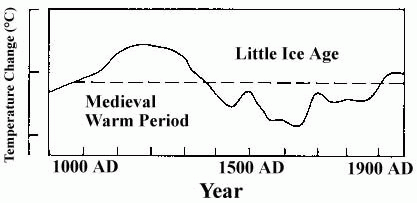
Which means that you only need a tiny change in the total sequestration of CO2 to make a difference - so what effect does deforestation and desertification have on CO2 levels, not to mention tiny changes in sea temperatures. The oceans have about fifty times the amount of CO2 dissolved in them as in the atmosphere - and we all know what happens when lager warms up. We've just come out of the Little Ice Age, so who's to say that the current increase in CO2 isn't a natural consequence?
Quote:
I know. Scary stuff! Anyway, to stay cheerful, I've looked up some stuff on the
Hubbert Peak, and now I am hoping that we run out of oil before we wreck the climate! By rights, that should be a spur to get geo-thermal and hydrogen solutions up and running, but they are too expensive (for you?), so I guess we’ll just have to do without any transport at one point.
Do you imagine for one moment that the mega oil companies and car manufacturers are just twiddling their thumbs, waiting for the oil to run out so they can shut up shop?
Quote:
We are just politely asking people to stop polluting the air. If they can't do that, then, second best, we ask them to pay for the pollution they cause.
CO2 is a colourless, odourless nontoxic gas, naturally occurring and essential to life - particularly plant life.
That doesn't fit my definition of 'pollution'.
The concentration in the atmosphere equates to around one third of a cubic centimetre of CO2 to one litre of air.
Quote:
Yet another dire
reportfrom Scripps Institution of Oceanography at the University of California, San Diego, seems to show something different.
Something different to what's been established for over a hundred years, well understood and not questioned by science then?
By what mechanism can CO2 possibly warm the oceans? Have they discovered another law of physics and chemistry somewhere?
They're really making this stuff up as they go along.
Nothing like a good scare story to attract research funding, is there?
Regards
Peter

 Login
 Register
 FAQ
 Search
 Members


 I misread your earlier post when you first brought up the topic of WAIS. I thought you had said